Starting an eCommerce business today is exciting, but it is also more competitive than ever. Most entrepreneurs chase traffic and ads without a roadmap. I have been there. My first store launched with a product, a website, and blind optimism. It flopped.
The turning point was treating every action as a learning opportunity. Over the years, I have scaled multiple stores from $0 to consistent six-figure months. Here is the blueprint I wish I had from day one.
“Your first sale is data disguised as revenue.”
First Sale Mindset: Validate Before You Invest
Your first sale is not just revenue; it is proof that your product works.
I wasted thousands building inventory before testing demand. Now, I run micro-campaigns and pre-order tests instead. This costs less and delivers real feedback.
Example: I launched a desk organiser campaign for $50 targeting “home office enthusiasts”. Initial conversions were low. I updated the copy to emphasise “save 30 minutes every day” rather than “premium organiser”. Conversions tripled.
Here is the exact ad structure I used for validation:
- Headline: “Tired of wasting time organising your desk?”
- Body: “Our [Product] saves 30 minutes daily. Try it risk-free today.”
- CTA: “Shop Now”
According to Shopify 2025, stores that validate products before scaling have a 60% higher chance of sustainable revenue growth, which aligned perfectly with my experience.
The takeaway is simple: treat your first sale as feedback, not luck. Every small win or failure teaches you how to approach the next campaign and how to build a repeatable lead generation system rather than chasing one-off wins, similar to the structured process outlined in our B2B Lead Generation Growth Guide.
Build Trust With Your Store
Design is not about minimalism; it is about credibility and clarity.
I optimised pages for trust using clear headlines, strong product imagery, and social proof. The goal was to answer one question in under three seconds: Can I trust this store?
Example: Adding customer photos and detailed reviews increased add-to-cart rates by 18 percent in one week.
My simple review setup:
- Customer photo
- Name and location
- Short quote: “This product saved me 15 minutes every morning!”
- Star rating
Video testimonials are equally powerful, with 73 percent of online shoppers more likely to purchase after watching a customer video review (Wyzowl, 2025).
Key takeaway: clarity, credibility, and social proof outperform fancy design every time. Trust-driven experiences rooted in empathy align with the human-first marketing approach used in our Human-First Campaign Framework.
Ads Are Feedback, Not Just Traffic
Most people treat ads as traffic machines. I used to think the same way, throwing budget at Meta or Google and hoping for sales. That mindset cost me hundreds before I realised ads are instant market research tools.
Example: I spent $500 on a campaign that looked perfect but delivered no results. Analytics revealed a micro-segment, urban professionals aged 28 to 35, converting at twice the rate. After shifting the budget and refining the messaging, 50 paying customers came in within a week.
Winning ad structure:
- Split by demographics such as age, interests, and geography
- Test messaging variations: pain-driven versus feature-driven
- Measure CTR and conversions, then double down on winners
WordStream 2025 reports that campaigns optimised this way achieve 30 percent higher ROAS than untargeted ads.
Viewing ads as a feedback loop rather than a traffic source allows ROI to compound, a principle also highlighted in our Real Estate Marketing ROI Guide.
Micro-Influencer Collaborations
Big influencers are expensive and often underperform. Micro-influencers consistently deliver higher engagement and better ROI.
Example: For a kitchen gadget launch, I partnered with seven influencers with 5k to 20k followers. Two did not respond, but the third posted a weekend Reel. Fifteen units sold within 24 hours. ROI was three times higher than working with a single macro influencer.
Outreach message that works:
“Hi [Name], love your content! I think our [Product] would resonate with your audience. Interested in a collaboration?”
Short-form video and social commerce matter because micro-influencers on Reels or TikTok drive impulse purchases more effectively than static posts.
Takeaway: engagement beats follower count, and early diversification reduces risk.
Conversion-Focused Product Pages
Your product page is a sales machine, not a brochure. Features do not sell on their own; benefits do.
Example: Highlighting “reduces meal prep time by 30 minutes” instead of “premium stainless steel” increased conversions by 12 percent.
Product page formula:
- Headline addressing a pain point
- Three benefit-driven bullet points
- Clear CTA: “Buy Now”
- Social proof such as photos or reviews
Baymard Institute 2025 reports that 68 percent of shoppers abandon carts due to unclear value propositions, proving that small messaging tweaks can create outsized gains.
Takeaway: focus relentlessly on clarity. Minor adjustments often outperform traffic spikes.
Automated Email Sequences
Email automation is the most profitable growth lever in eCommerce.
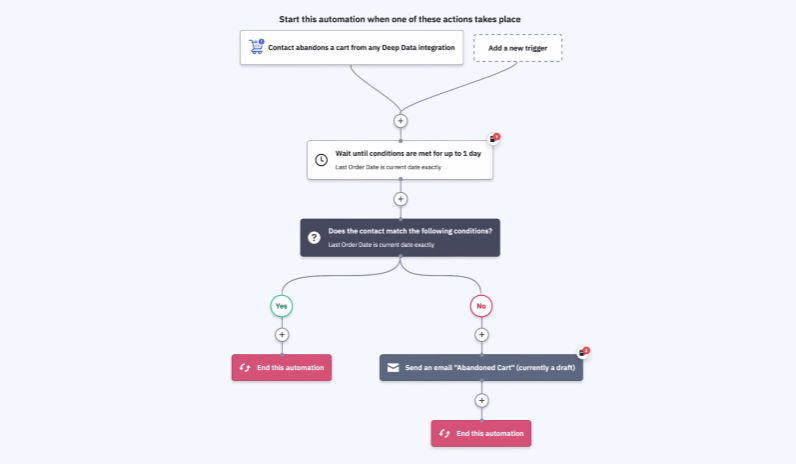
Example: Implementing abandoned cart, post-purchase, and VIP sequences increased revenue. Moving abandoned cart emails from one hour to 15 minutes after abandonment recovered 30 percent more carts.
Abandoned cart email template:
- Subject: “Oops! You left something behind…”
- Body: “Hi [Name], your [Product] is waiting. Complete your order within 24 hours and get 10 percent off.”
- CTA: “Complete My Order”
Takeaway: every email should educate, nudge, or delight. Timing and relevance matter more than volume.
Customer Feedback Loops
Listening to early customers is free research and development.
Example: Customers raised concerns about packaging. After redesigning it, refunds dropped and repeat purchases increased.
Takeaway: feedback shapes products, messaging, and funnels. Use it early and continuously.
Paid and Organic Synergy
Paid and organic channels strengthen each other.
Example: A high-performing Meta ad was turned into a blog post that drove organic traffic. Later, organic content became landing pages for retargeting ads.
Takeaway: insights from one channel improve the other, compounding growth without additional spend.
Scaling With Data
Scaling too quickly is risky. Spend only increases when performance metrics justify it.
Example: Campaigns failing to meet ROAS benchmarks for two weeks were paused. Only profitable campaigns were scaled.
Takeaway: scaling is a discipline, not a gamble. Focus on CAC, ROAS, and LTV.
Community and Brand Building
Communities scale better than transactions.
Example: A WhatsApp group of 50 superfans shared purchases, generating 20 new customers without ad spend.
2025 trend: niche communities drive repeat purchases and organic referrals.
Takeaway: community-led growth costs less and compounds faster when built early.
Repeat Purchase Optimisation
Existing customers are far cheaper to retain than acquiring new ones.
Example: Offering 10 percent off complementary products post-purchase increased AOV by 15 percent.
Upsell message template:
“Thank you for your purchase! Complete your set with [Product] and get 10 percent off.”
Takeaway: retention fuels long-term profitability. Automate nudges to increase lifetime value.
Continuous Testing and Iteration
The eCommerce landscape evolves constantly.
Example: Testing emotional versus feature-led product titles revealed pain-point messaging outperformed features by 25 percent.
Takeaway: growth comes from disciplined experimentation. Track results, learn from failures, and double down on what works.
Trends to Watch in 2025
AI-powered recommendations improve personalisation. Short-form commerce drives impulse buying. Zero-party data enables hyper-personalisation without relying on third-party cookies.
Takeaway: adopt trends carefully and always test before full-scale rollout.
Final Thoughts
Scaling eCommerce in 2025 is not magic. It is iterative, data-driven, and human-centred.
From first sale to scale, the blueprint remains consistent: validate, build trust, learn from data, systemise, build community, and iterate relentlessly.
“Growth is a discipline of experimentation, optimisation, and human-centred strategy.”
Follow this blueprint, and even a small store can evolve into a repeatable, high-revenue business without relying on luck.